

Building a Privacy-First Marketing Stack: Tracking, Forms, and Consent Without Bloat
Quick architectural takeaway: The average B2B marketing website loads between 15 and 25 third-party tracking pixels—bloating page load times by 2–4 seconds, triggering intrusive cookie consent banners, and leaking visitor browsing data to ad tech brokers. A modern privacy-first marketing stack achieves complete traffic visibility, higher lead conversion, and bulletproof GDPR/ePrivacy compliance by adopting cookieless analytics, progressive profiling forms, and server-side tracking.
Privacy and marketing performance are not opposites. Removing 500KB of third-party tracking scripts improves mobile load times instantly, raising organic search rankings and form conversion rates.
The Surveillance Debt: Why Legacy Tracking Is Hurting B2B Conversions
For years, digital marketing playbooks encouraged installing every available retargeting tag, session recording tool, and cross-site identity resolution pixel. In 2026, this approach carries severe operational penalties: ad blockers prevent up to 40% of tracking scripts from executing, aggressive consent banners alienate first-time visitors, and enterprise buyers routinely browse behind corporate VPNs that block third-party trackers entirely. Combined with Biglogy’s guides on how to evaluate SaaS privacy policies and inspecting vendor security certifications, this blueprint shows how to build a high-performance marketing engine that respects visitor autonomy.
Legacy Surveillance Stack vs. Modern Privacy-First Architecture
| Marketing Function | Legacy Invasive Approach | Modern Privacy-First Architecture |
|---|---|---|
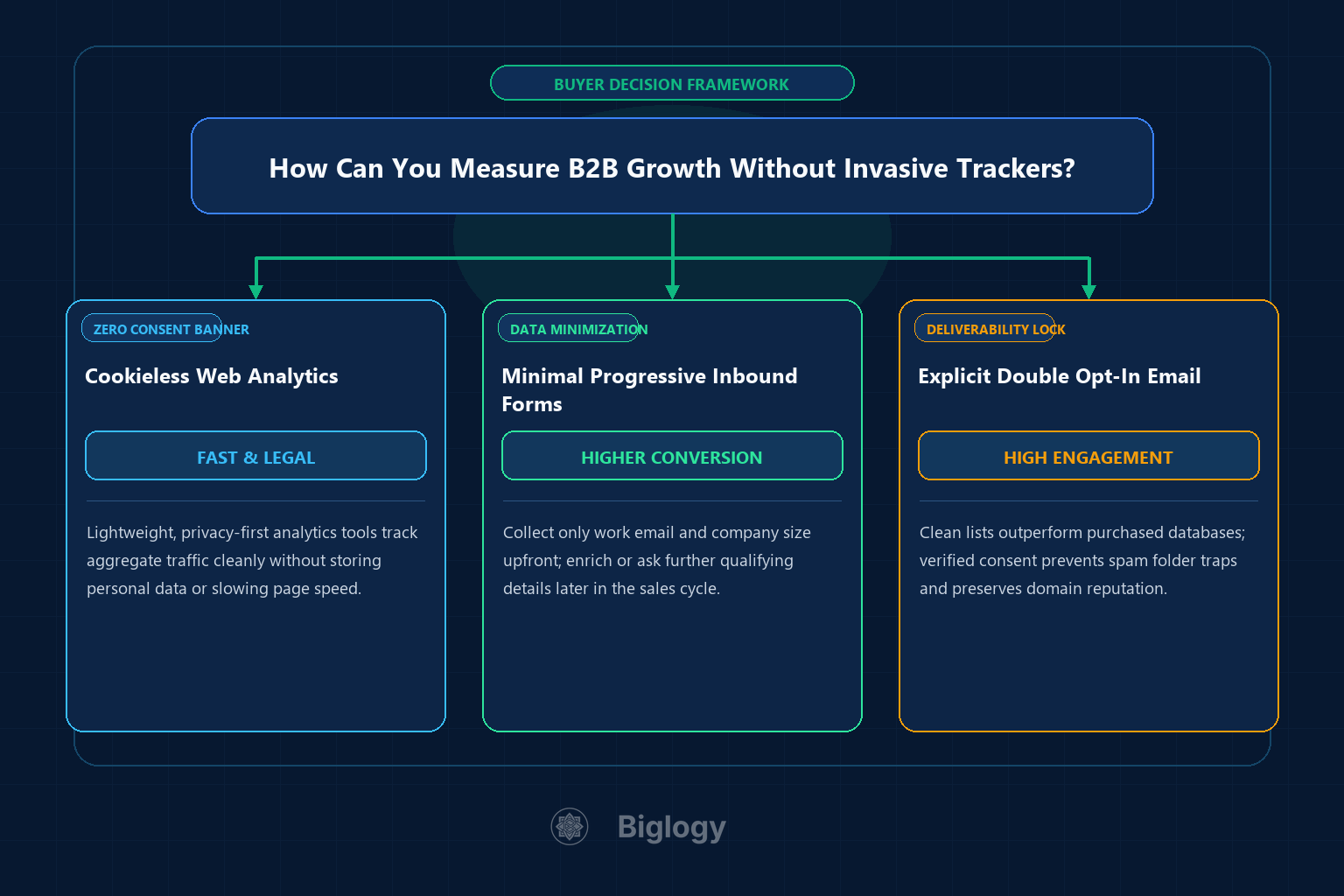
| Web Traffic Analytics | Heavy tracking cookies, cross-site profiling, full IP logging, intrusive consent banners. | Cookieless, lightweight aggregate analytics (<5KB script), zero personal data storage, no cookie banner needed. |
| Lead Capture Forms | 10+ required fields asking for phone, address, and budget upfront; high friction. | Minimal 2-field intake (Work Email + Problem Category); progressive enrichment later. |
| Email & Campaign Tracking | Invisible 1×1 tracking pixels spying on user open timestamps and location IPs. | Link-click engagement metrics; explicit double opt-in; clean list hygiene. |
| User Behavior / Heatmaps | Continuous session recording capturing unmasked keystrokes and sensitive form inputs. | Selective usability testing with explicit opt-in; server-side error logging. |
Privacy-First Marketing Blueprint
Review the clean 3-tier architecture below that decouples traffic measurement from personal data surveillance.
No-Tool First Step: The 15-Minute Tag Audit & Script Purge
- Audit Google Tag Manager / Header Scripts: Open Chrome DevTools -> Network Tab. Filter by
jsand sort by transfer size. Identify third-party domains firing on page load. - Purge Zombie Retargeting Pixels: Remove Facebook, TikTok, or legacy ad network tags if your team is not spending active budget on those platforms.
- Adopt Data Minimization on Forms: Eliminate phone number and company physical address fields from top-of-funnel lead forms; every eliminated field increases completion rates by 5–10%.
Copyable Website Privacy Header Notice
When using cookieless, non-tracking aggregate analytics, you can replace heavy modal consent walls with a transparent, clean footer badge:
<!-- Privacy Notice Badge -->
<div class="privacy-badge">
  <span>🛡️ Privacy-First Site: We use cookieless, aggregate analytics to measure traffic.
  We never track you across the web, sell data, or use invasive cookies.</span>
</div>
Aligning Marketing Practice with Editorial Integrity
At Biglogy, we practice what we publish. Our site operates on clean typography, zero intrusive ad networks, and transparent disclosures for commercial partnerships. Learn more about our foundational commitments in the Biglogy Publishing Charter and our Content Philosophy.
Frequently Asked Questions
Do cookieless analytics require a cookie consent banner under GDPR?
No. If an analytics tool does not use cookies, does not store persistent device identifiers (fingerprinting), and processes only anonymized aggregate data, a cookie consent banner is generally not required under the ePrivacy Directive.
How does cookieless analytics track unique visitors?
Cookieless analytics tools typically generate a daily rotating cryptographic hash based on the visitor’s IP address, user agent, and salt. The hash resets every 24 hours, preventing cross-day or cross-site tracking.
Will removing tracking pixels hurt our retargeting ad campaigns?
If you rely heavily on retargeting ads, run those pixels strictly on dedicated landing pages where consent is collected, rather than polluting your entire corporate content blog.
Why is email open tracking becoming unreliable?
Features like Apple Mail Privacy Protection (MPP) pre-fetch email assets on proxy servers, reporting false 100% open rates. Modern email marketing prioritizes link click-throughs and reply rates over open metrics.
What is progressive profiling?
Progressive profiling collects only essential information on the first interaction (e.g., email address) and requests additional context (e.g., team size, integration need) on subsequent visits or kickoff calls.
Editorial transparency: This architectural guide is non-commercial educational content. Read our complete standards in our Content Philosophy.


Trackbacks & Pingbacks
[…] guide on building a privacy-first tech stack underscores that security policies must assume sensory channels can be simulated and require […]
Leave a Reply
Want to join the discussion?Feel free to contribute!